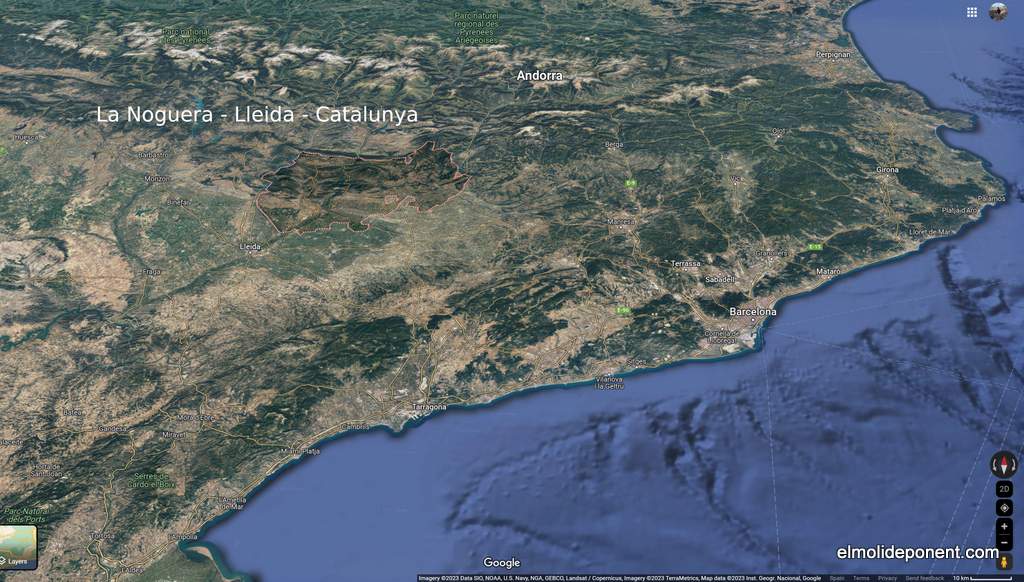
Discover the natural wonders and cultural treasures of les Terres de Lleida, where ancient heritage blends with breathtaking landscapes and vibrant traditions. This unique region offers unforgettable experiences, from exceptional ecosystems and outdoor adventures to rich gastronomic delights.
In the plain, the dryland areas contrast with the irrigated zones of the Segarra-Garrigues and the canal d'Urgell, creating a unique and fascinating environment.
The secans lleidatans, covering nearly 90,000 hectares of steppe terrain, constitute an exceptional ecosystem in Europe. This habitat is the last refuge for numerous endangered species, such as the red-tailed lark, the sisó, the ganga, and the calàndria.
Wetland areas are natural spaces of ecological importance. Thus, the embassament of Sant Llorenç de Montgai and the estany d'Ivars stand out for their rich diversity of fauna, making them ideal settings for the conservation and study of aquatic ecosystems.
The Terres de Lleida have established themselves as a reference point in ornithological observation, attracting enthusiasts with the variety of bird species that inhabit the region.
The rivers Segre, Noguera Ribagorçana, and Noguera Pallaresa, along with the reservoirs of Camarasa, Sant Llorenç de Montgai, Rialb, Santa Anna, and Canelles, form wet environments ideal for activities such as kayaking or catch-and-release fishing.
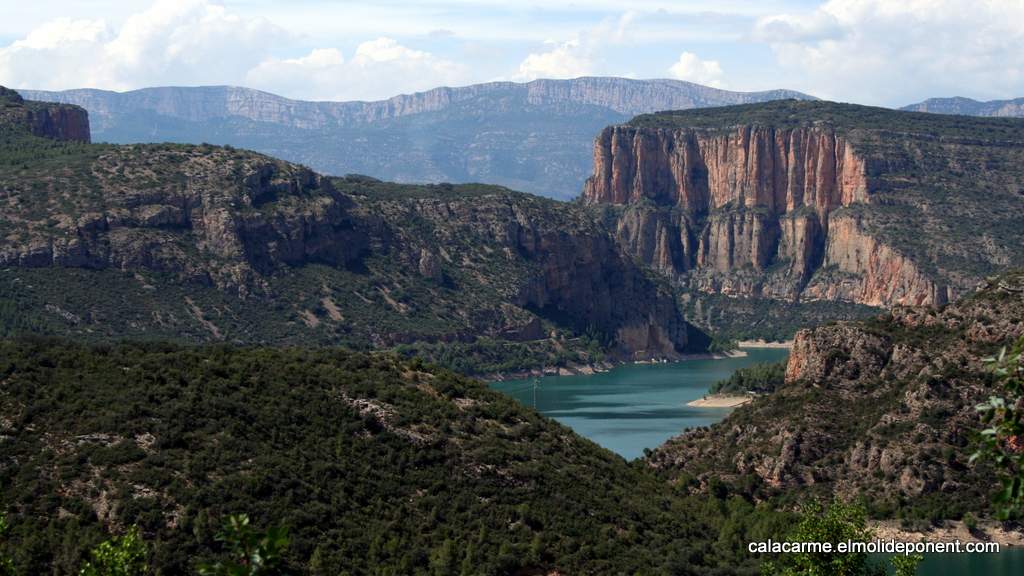
Montsec, with its imposing red-hued rock face, defined by the congostos of Mont-rebei, Terradets, and the pas Nou, opens up a world of excursions, where the classic route through Mont-rebei stands out.
The gastronomic richness of the region is reflected in the wines of Costers del Segre and the oils with various designations, especially those from les Garrigues, as well as in the agricultural tradition that nourishes our restaurants with authentic flavors.
We must not forget the torrones from Agramunt and Os de Balaguer, nor the coques de recapte from the many local bakeries, always busy with people returning to the capital with the desire to take a piece of Lleida home.
The fruit stands, which fill the plain with vibrant colors, have become an important tourist attraction in the area.
The sky of Lleida, with its Starlight designation, is famous for its excellent quality when it comes to stargazing.
Furthermore, les Terres de Lleida host numerous festivals with great attendance, such as the Aplec del Cargol de Lleida, the Fira de Teatre de Tàrrega, the Aquelarre de Cervera, and la Transsegre de Balaguer.
The historical and cultural richness is also evident in the remnants of the past: castles, towers, churches, as well as paleontological, archaeological, and geological treasures, offering attractions for every taste.
Finally, les Terres de Lleida are a true paradise for lovers of sports and physical activity. With an extensive network of routes for cycling, hiking, and rock climbing, the contrasting landscapes — from expansive fields to rugged mountains — offer challenges for all levels, turning each outing into an unforgettable experience.
It is a pleasant excursion suitable for all audiences, with a route so well-conditioned that it feels more like a leisurely walk. The landscapes, the light, the colors of the rocks, and the wildlife—already accustomed to human presence—make this experience a very enjoyable outing. However, it’s not uncommon to find someone huffing and puffing. Bring water, especially in summer, as most of the route is exposed to the sun.
The Route
This is a less than three-hour walking route around the Sant Llorenç de Montgai reservoir.
We parked the car at the Camping la Noguera. Then, we took the track leading to the dam, where we could observe aquatic birds flying over the Segre. From here, we headed left, following a trail that winds through pines and oaks beneath the Coma de Gelis until reaching the Escalera Bridge. Across the lake, you can see Sant Llorenç de Montgai and the various climbing walls on the San Salvador mountain. We returned via the road, where a parallel walkway has been set up alongside the highway.
The Dam
The Sant Llorenç de Montgai hydroelectric plant has an installed capacity of 7.4 megawatts and is also the origin of the Urgell Auxiliary Canal, with a flow rate of 8 m³/s.
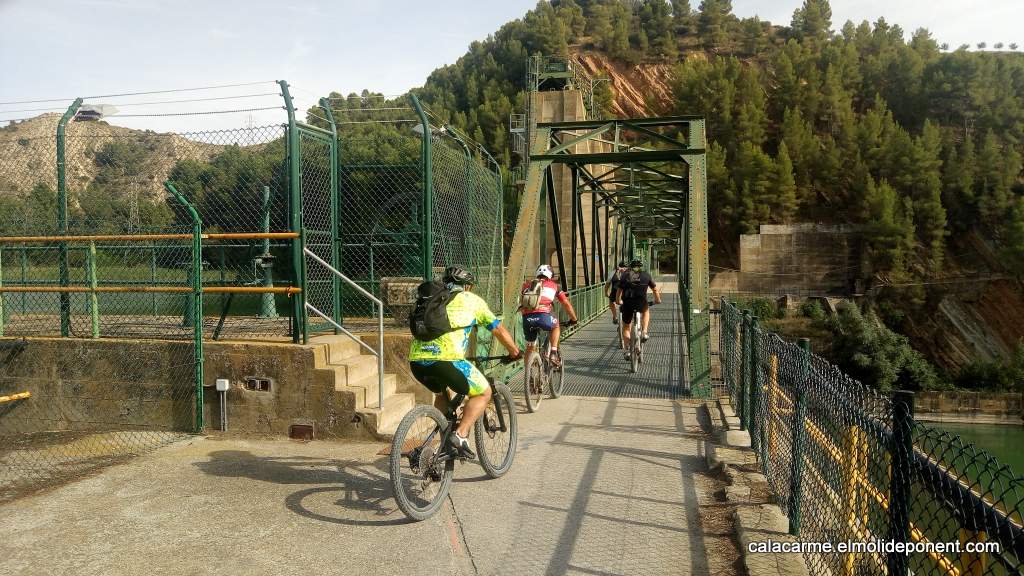
Above the dam runs the long-distance cycling route that connects Lleida with La Pobla de Segur. We are on the Balaguer - Sant Llorenç de Montgai section, which is about 12 kilometers long.
The Other Side of the Lake
Despite the noise of cars still echoing from the road, the cries of birds of prey can be heard from the rocks of Monteró. Along the edge of the reservoir, massive trout swim majestically through the river.
The Escalera Bridge
La Roca dels Bous - Climbing
La Roca dels Bous is an archaeological site from the Middle Paleolithic period, inhabited by Neanderthals 50,000 years ago. Excavations have uncovered information about their tools, subsistence strategies, and ways of life. In 2015, it was declared a Cultural Asset of National Interest due to its historical and scientific significance.
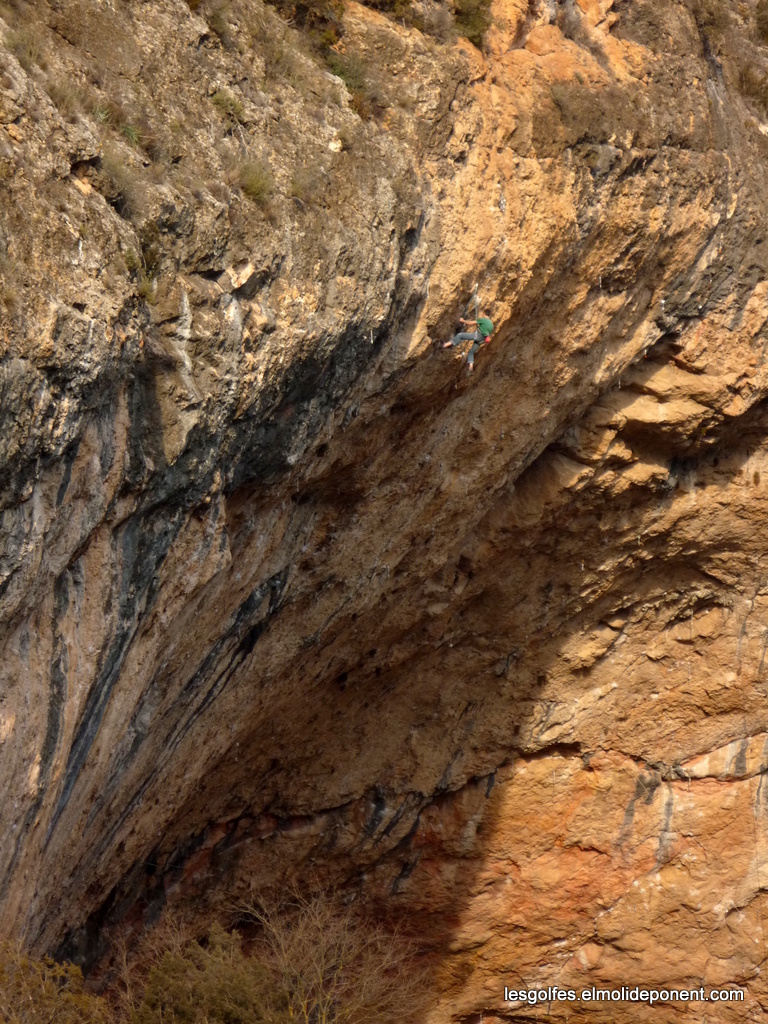
Archaeology in Lleida is always accompanied by climbers. The Pared del Oso and the Cylinder are iconic rock formations that offer numerous climbing routes of varying difficulties, making them very popular among climbers.
The Reeds with Cattails
The Sant Llorenç de Montgai dam maintains a high and constant water level throughout the year, allowing for the development of an extensive strip of reeds with cattails. This environment provides an ideal habitat for numerous species of aquatic birds. For this reason, the reservoir is a Wildlife Nature Reserve.
Walk Around
We cross Sant Llorenç de Montgai by skirting the lake.
The Mu Gorge is an ideal excursion for spring and autumn, best done early in the morning, before anyone else, to be able to see the wildlife in action. It's better to do it from Camarasa to Alòs de Balaguer and back, as this way we can make a stop to refuel in Alòs de Balaguer.
The Mu Gorge follows the old bridle path that existed between Camarasa and Alòs de Balaguer, which partly disappeared in 1991 with the construction of the mini dam, and which was later restored in 1998 with several paths and the suspension bridge.
From El Pont de Pastor to the mini dam
Since the pandemic and the overcrowding of outdoor activities, there is a barrier in the Pont de Pastor that is normally closed, that is, we cannot reach the mini dam by car as we did before. We will have to start the route at Pont de Pastor, which means traveling 4 km more. In total, going from Pont de Pastor to Alòs de Balaguer and back is about 17 km.
The first section is a 2 km paved track, shady, that borders the Segre and leads to the mini-dam. You pass next to the old Fecsa camp and find a lot of climbing routes ideal for doing in summer.
The mini dam and the suspension bridge
Just below the mini dam is where the Noguera Pallaresa and the Segre rivers converge.
The Noguera Pallaresa originates in the Pla de Beret, in the Aran Valley, just a few meters from where the Garonne River, which flows towards the Atlantic, originates. The Segre River originates in the Cirque de la Culassa, in the High Cerdanya, and flows into the Ebro River in Mequinenza.
The ensemble formed by the Camarasa dam, the mini dam, the walkways, and the bridge over the Segre constitute a rather interesting space that already deserves a visit in itself.
The Mu Narrows
The Mu Narrows influenced the floods of November 1982, which completely submerged the El Molí Restaurant in Alòs de Balaguer. At the monument to Sant Esteve nearby, you can find the mark indicating how far the water reached.
Between the Mu Narrows and the Espadella Spring, in the Roques Prenyades, you'll find the Cova del Parco, an active archaeological site under the direction of the University of Barcelona.
The Espadella Spring
At the picnic area of the Espadella Spring, you can reach it from Alòs de Balaguer by car via an unpaved track which, in the event of recent rain, may be in poor condition.
Don't forget to bring water and sunscreen, especially if you're doing the excursion in summer.
Alòs de Balaguer
Once in Alòs de Balaguer, we can complement the journey by ascending to the castle through the village or visiting the chapel of Sant Miquel. Both excursions offer us a privileged view of the valley. There's also the possibility of simply strolling through the streets of the village, as suggested in the following image, and discovering its peculiarities.
We can refuel at Restaurant El Molí or visit the swimming pools; in both cases, we can feel the water from the Segre or the Font del Prat stream respectively while regaining our strength.
Flora and Fauna
The Aiguabarreig del Segre-Noguera Pallaresa, part of the Natura 2000 Network, is a protected natural area covering 10,237 hectares. The landscape varies from watercourses to rugged areas with holm oaks, oaks, and pines. We also find Mediterranean shrubs and bushes with aromatic and medicinal plants. Plants adapted to cliffs stand out, such as rock tea and rock carnation, endemic to the area. Along the Segre riverbank, we find alders
The cavities and ledges of the cliffs and walls in this area are shelter and breeding places for large birds of prey such as vultures, peregrine falcons, and golden eagles.
For Those in a Hurry
The shortest version would be to drive to the Espadella Spring, and then walk the part of the walkways and the suspension bridge to the two rivers, and return. This way, we only do the most interesting part of the excursion.
Sant Llorenç de Montgai is a fantastic leisure space where you can stroll, kayak, cycle, and rock climb; it's a place where we can recharge with positive energy.
Getting lost in Sant Llorenç de Montgai
We've deliberately taken the narrow secondary road LV-9047, full of twists and turns, between vertical rocks where climbing is practiced. As the Segre River widens due to the reservoir, Sant Llorenç de Montgai stands out in the distance, blending with the riverbank.
Sant Llorenç de Montgai is a peaceful spot, off the tourist routes, where we can enjoy numerous activities related to its small reservoir, such as kayaking, sport fishing, and bird watching.
Houses bordering the reservoir
The lake
The dam, built in 1929, gave rise to this fantastic natural space. In 1990, it was declared a Natural Reserve due to the abundance of waterfowl and its scenic interest.
Gates of the Sant Llorenç dam
The school
Part of the old school has been transformed into the bar-restaurant "El Mirador del Llac", which features an idyllic terrace overlooking the reservoir. It serves as a meeting point for both the locals and the groups who are climbing in the area.
Old school of Sant Llorenç
The Lake Train
Sant Llorenç de Montgai is one of the stops on El Tren del Llacs (Lakes Train) that runs from Lleida to La Pobla. The journey, marked by the Segre and Noguera Pallaresa rivers, is filled with tunnels and bridges, and features exceptionally beautiful landscapes.
Lake Train Stop
La Roca dels Bous
The Roca dels Bous is an archaeological site that seeks traces of the stays made by groups of Neanderthals in this rocky shelter thousands of years ago. It can be visited with the guidance of Espai Origens.
The rocks on the sides of the Roca dels Bous, such as the Cilindro and the Pared del Oso, are usually filled with climbers. It could be said that Sant Llorenç is the climbing capital of this area of Lleida.
La Roca dels Bous - Cilindro - Pared del Oso
The Camping La Noguera
The La Noguera campground has become a major catalyst for the area, featuring a restaurant, indoor pool open year-round, paddle tennis court, and rental services for bicycles and kayaks.
Discover the wonders of La Noguera: activities for families and history
buffs, prehistoric heritage and medieval, exuberant nature, local gastronomy
and exciting adventures outdoor. Explore the Mont-rebei Gorge, caves and
medieval monuments. Enjoy climbing in the Cova Gran de Santa Linya and
sports nautical in the calm waters of the reservoirs from Camarasa,
Canelles, Santa Anna, Sant Llorenç de Montgai and Rialp. A unique
destination in Catalonia for all tastes.
In Balaguer, the capital of Noguera, we can search
for gold in the Segre River with the
Center for Gold Interpretation, which
is part of the Noguera Museum.
In Camarasa, with
Origins Space, we can learn about the
Neanderthals and participate in other activities related to prehistoric,
historical, and natural heritage in the surroundings of the Mont-roig
mountain.
At the
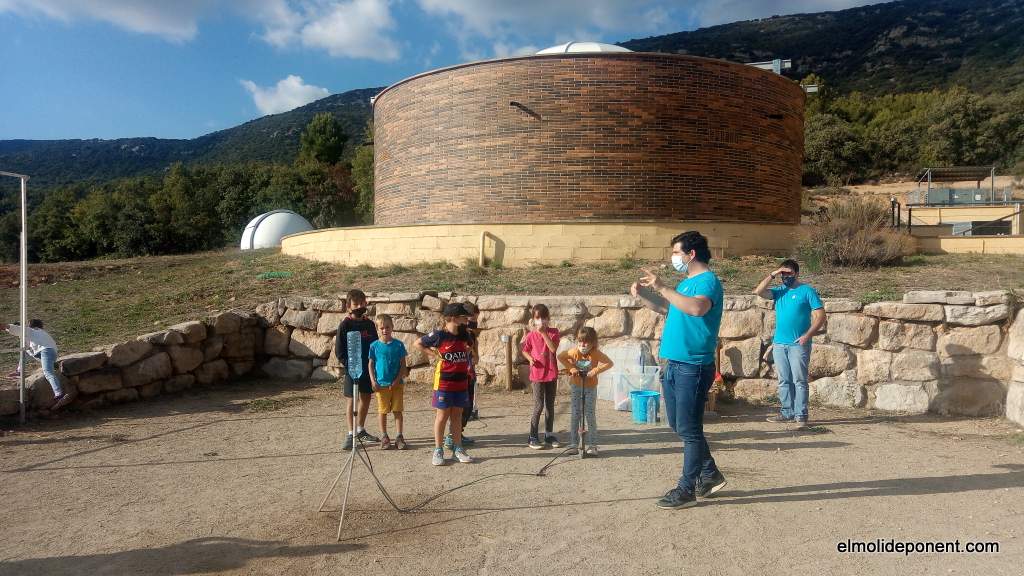
Montsec Astronomical Park
in Àger, in addition to observing space, various
activities related to astronomy and science are organized.
At the
Monastery of Las Avellanas, many interesting activities are organized, such as medieval dinners,
historical events, and nighttime concerts.
Castell del Remei
has established a
Foundation with the aim of
preserving its valuable heritage. Through this initiative, various activities
are organized, including yoga, jazz, exhibitions, wine tastings, concerts, and
races.
Small but Unique Villages
Sant Llorenç de Montgai, a natural reserve for waterbirds, is my favorite place in Noguera. When I
visit, I can feel my heart rate slowing down.
Alòs de Balaguer, more remote,
is the realm of hunters and fishermen.
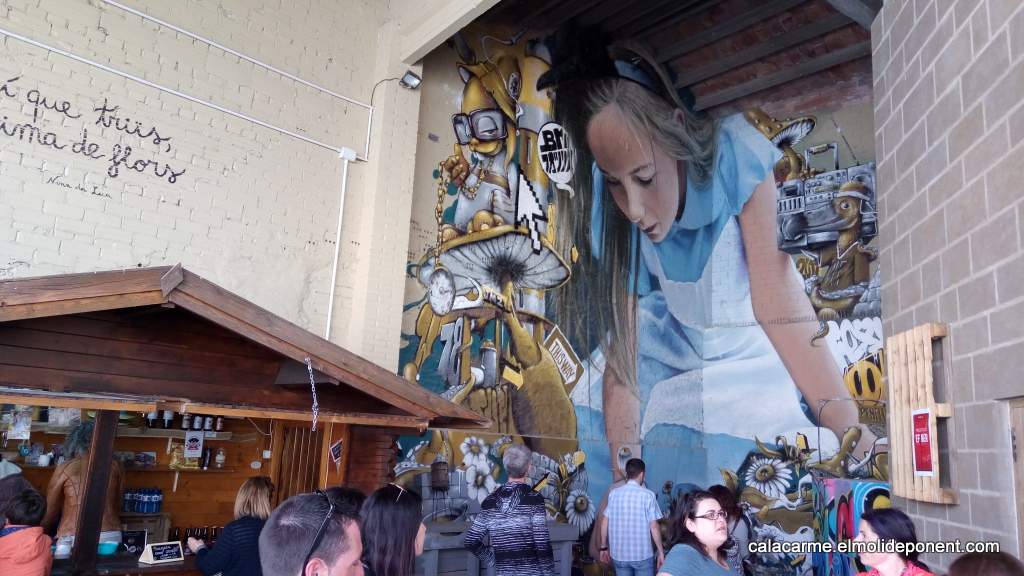
Penelles has become
the capital of Street Art in Lleida.
Tiurana with
its starlight certification is the ideal place to spend summer nights.
Penelles - Street Art
Gastronomy
Barley, wheat, almond trees, olive trees, vineyards, honey, milk, and the
orchard all contribute to the rich
gastronomy of Noguera. Additionally, there are
small workshops that transform these elements into wine, beer, cheeses, jams,
samfaina cakes, and many other culinary delights. These products end up
nourishing our restaurants that are gaining
culinary excellence day by day.
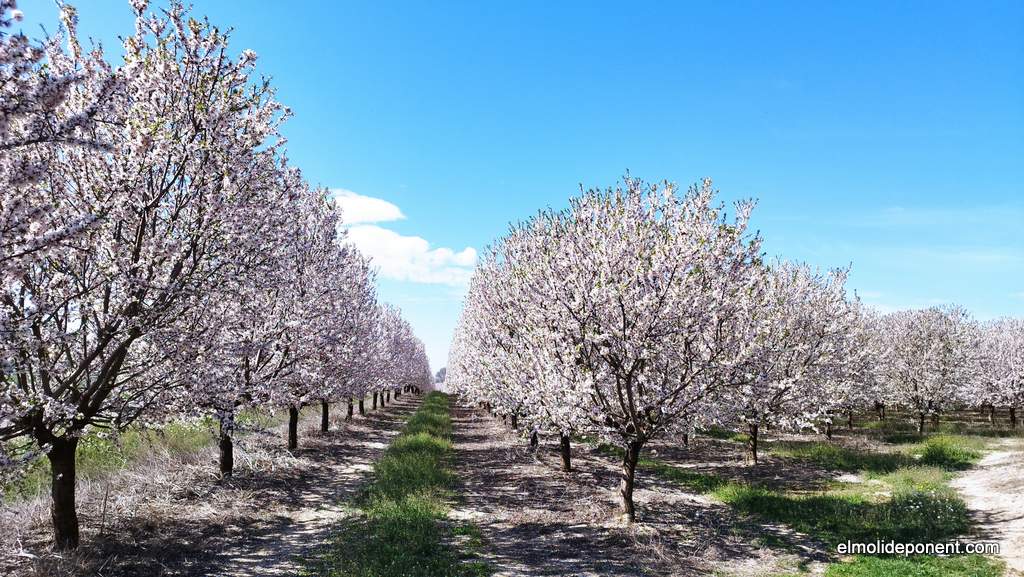
Blossoming almond trees
Heritage
Prehistory chronological axis made by the Museu de la Noguera
From prehistory, we have the rock paintings of the Vilars cave in Os de
Balaguer, the archaeological site of the
Parco cave
in Alòs de Balaguer, the Neanderthal shelters of the
Cova Gran
in Santa Linya, and the Roca dels Bous in Sant Llorenç de Montgai. We also
have fossil sites like
la Pedrera
in Vilanova de Meià.
Map made by the Museu de la Noguera
In the medieval period, Noguera was a borderland and part of the County of
Urgell, where castles, monasteries, and Romanesque hermitages were built, such
as the
Monastery of Santa María de las Avellanas, the
Montsonís Castle,
and the collegiate church of Sant Pere d'Àger.
There are also Spaces of Memory from the Spanish Civil War, such as the
Merengue hill in Camarasa and the wartime remnants around the Cap de Pont in
Balaguer.
We must not forget the extensive heritage of Balaguer, the capital of Noguera,
and its
walls
within which the three monotheistic cultures, Christians, Muslims, and Jews,
coexisted.
The Montsec, Mont-Roig,
Sant Mamet, and the Montclús mountain range offer countless possibilities, such as
hiking to the
Pedrera de Meià
from the Santa Maria de Meià side or from the Doll Road near to Terradets.
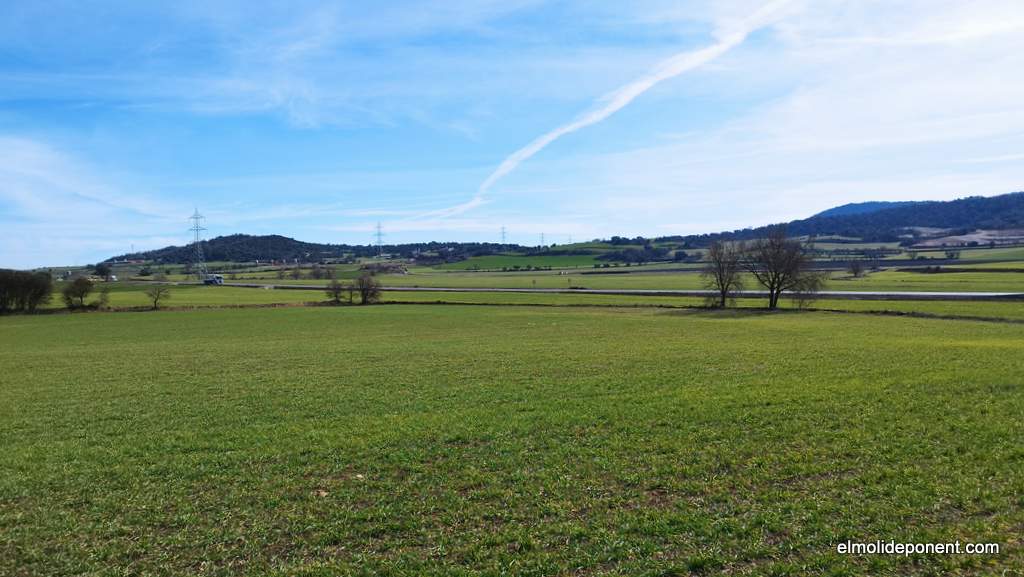
Exploring the plain with its fields that change color with the seasons,
collecting thyme, rosemary, asparagus... Open spaces that are a delight to the
senses.
Barley and wheat fields in February
Motorized Excursions
Our preferred motorized route, whether on a motorcycle or in a car, is the
circuit around Montsec de Rúbies, passing through the Doll Road, Terradets, Barcedana Valley, El Pas Nou, and
Vilanova de Meià Valley.
The
Cova Gran de Santa Linya
is world-renowned in the rock climbing community. Chris Sharma lived in
Sant Llorenç de Montgai
for many years. Accommodations in Camarasa are
always filled with climbers from all over the world.
The Cova Gran de Santa Linya
Active Tourism - Land, Air, Water
In Àger, the capital of
Montsec de Ares, the spirit of adventure sports
permeates the environment. It's an area renowned for free-flying, with a
special emphasis on paragliding and hang gliding. You can also enjoy hot air
ballooning, ultralight flying, as well as gliding and paramotoring. Several
specialized companies and schools offer courses, introductory flights, g uided
outings, and equipment rentals.
The reservoirs of Camarasa, Canelles, Santa Anna,
Sant Llorenç de Montgai, and Rialp,
the largest area of calm waters in Catalonia, are ideal places for water
sports, including kayaking, canoeing, water skiing, and sailing.
Mountain bikes crossing the Sant Llorenç de Montgai dam